




Background
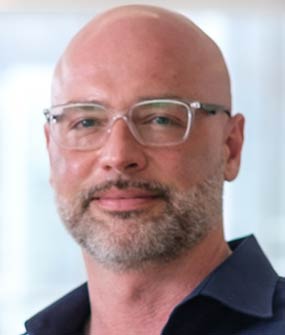
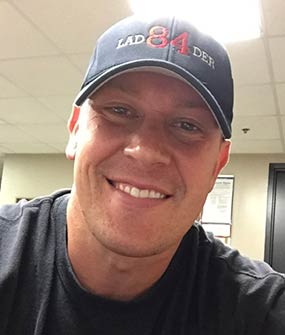
Luke serves as a Captain Training Officer with Waterloo Fire Rescue and is a Master Instructor for the IAFF Fit to Thrive program. He is Vice President of the Waterloo Professional Fire Fighters Association (Local 791), Co-Chair of the Joint Occupational Health and Safety Committee, and Health and Wellness Coordinator for Waterloo Fire Rescue. He also serves on the OPFFA Health & Safety/Ontario Fire Service Section 21 Advisory Committee and the NFPA 1580 Technical Committee.
Luke’s work focuses on advancing firefighter health, performance, and organizational systems that support long-term operational readiness and career longevity. He brings 25 years of experience in sport, exercise, and injury prevention. Since 2001, he has worked as a performance and injury-prevention specialist across rehabilitation, health, and high-performance environments. Since 2008, he has collaborated with researchers from the University of Waterloo and the University of Toronto to develop firefighter wellness and fitness programming aligned with occupational demands.
He holds a Bachelor’s degree in Human Resources and Labour Relations and is completing an MBA focused on Organizational Behaviour, Change Management, Business Analytics, and Performance Management. His academic work is centred on the responsible application of organizational and analytical principles to strengthen firefighter health, performance, and longevity through well-designed wellness and fitness systems.
Activity Habits
Luke leads a very active and busy life outside of work. He considers himself a life-long learner and is in the process of completing a Master’s in Business Administration. Family is very important to Luke and he does his best to spend as much time as possible with them, particularly at their lake house in Northern Ontario. To date, he has completed two full marathons in New York City and although running is a large component of his weekly training, he would describe his relationship with the activity as love-hate! Resistance training of any type, for example Olympic Lifting or circuit style training, is Luke’s preferred type of exercise. He gets immense satisfaction from lifting heavy things up and putting them back down again. On a day-to-day basis, Luke also builds in as much non-structured activity as possible in the form of walking, taking the stairs, and being active commuter whenever possible.
There is nothing that makes Luke feel at his best, both physically and mentally, more than exercise. The sense of accomplishment he feels from completing some form of physical activity and exercise daily also gives him something to strive for. Luke’s motivation to be active is further related to the commitments he has made to his family, fellow fire fighters and the citizens of Waterloo, that he will be fit and ready to attend to his duties if and when he is called upon to do so. Time constraints and the fatigue associated from shift work sometimes make it challenging for him to exert the effort he feels is necessary for him maintain his physical capacity. Luke does his best to actively manage these challenges by adopting a flexible mindset and using exercise strategies he has developed for these cases.
Perspectives on F2T and fire fighter wellness and fitness
In Luke ‘s opinion, the F2T program is unique because it is based on a peer-to-peer model that facilitates knowledge to be transferred in a way that corresponds with fire service culture. Further, the program also addresses the behavioral side of physical activity, which is a crucial piece that needs to be addressed for changes to occur at the individual and organizational level. He would like fire fighters and departments to know that the objective of the program is to cultivate happy and health employees who can meet the demands of the job and still be capable of doing all the things they want and need to do, in their personal lives. The value of this for all stakeholders is immeasurable.
The two words Luke would use to describe the value of the F2T program for fire fighters is education and empowerment. He would advise fire fighters thinking about investing in their wellness and fitness to start small and take an incremental approach to adopting new behaviors. This strategy will amount in small victories, which over time will compound to make the desired change long-lasting and resilient.

 USD
USD  CAD
CAD